
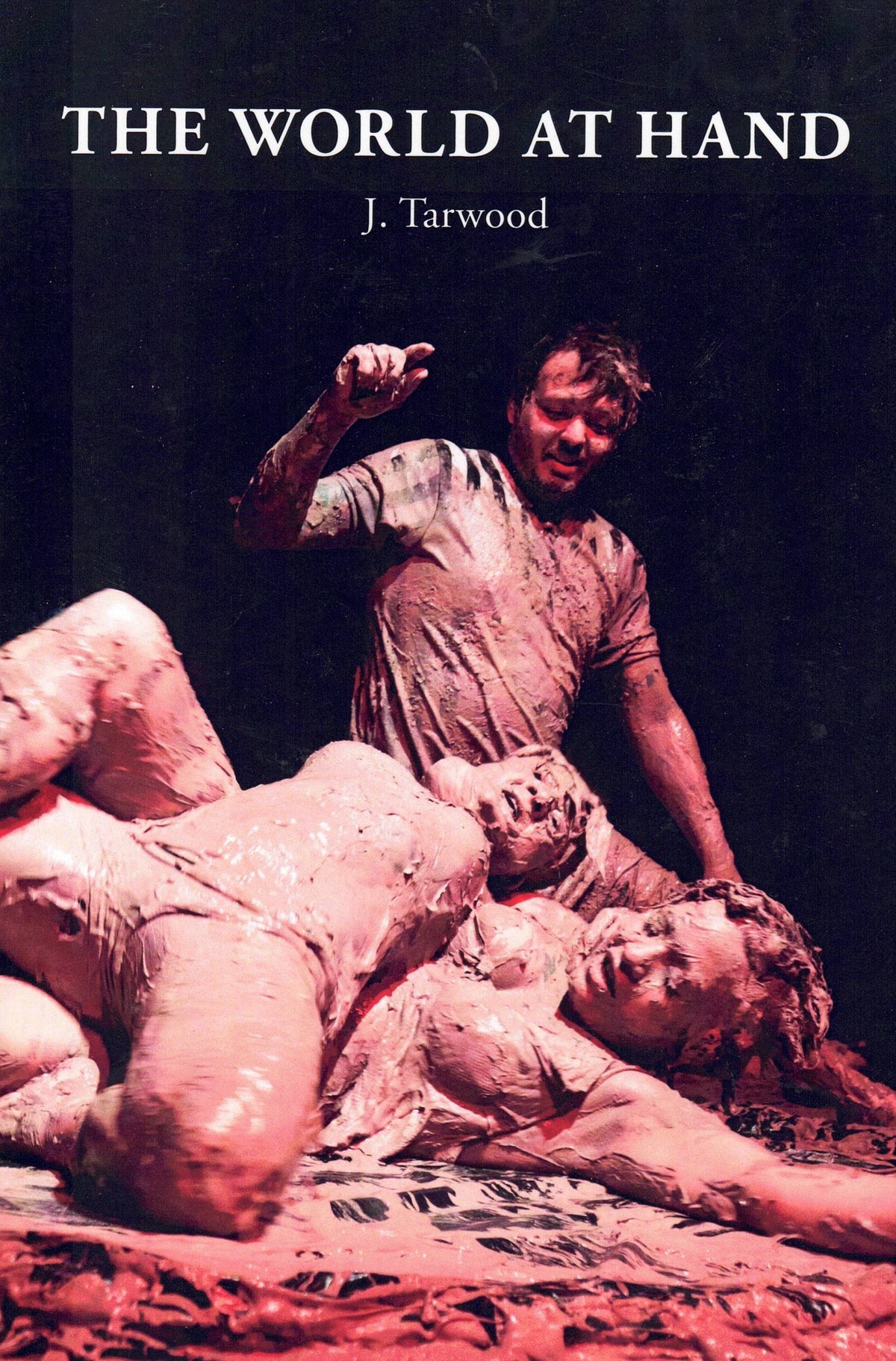
The World At Hand — J. Tarwood (2023)

$20.00

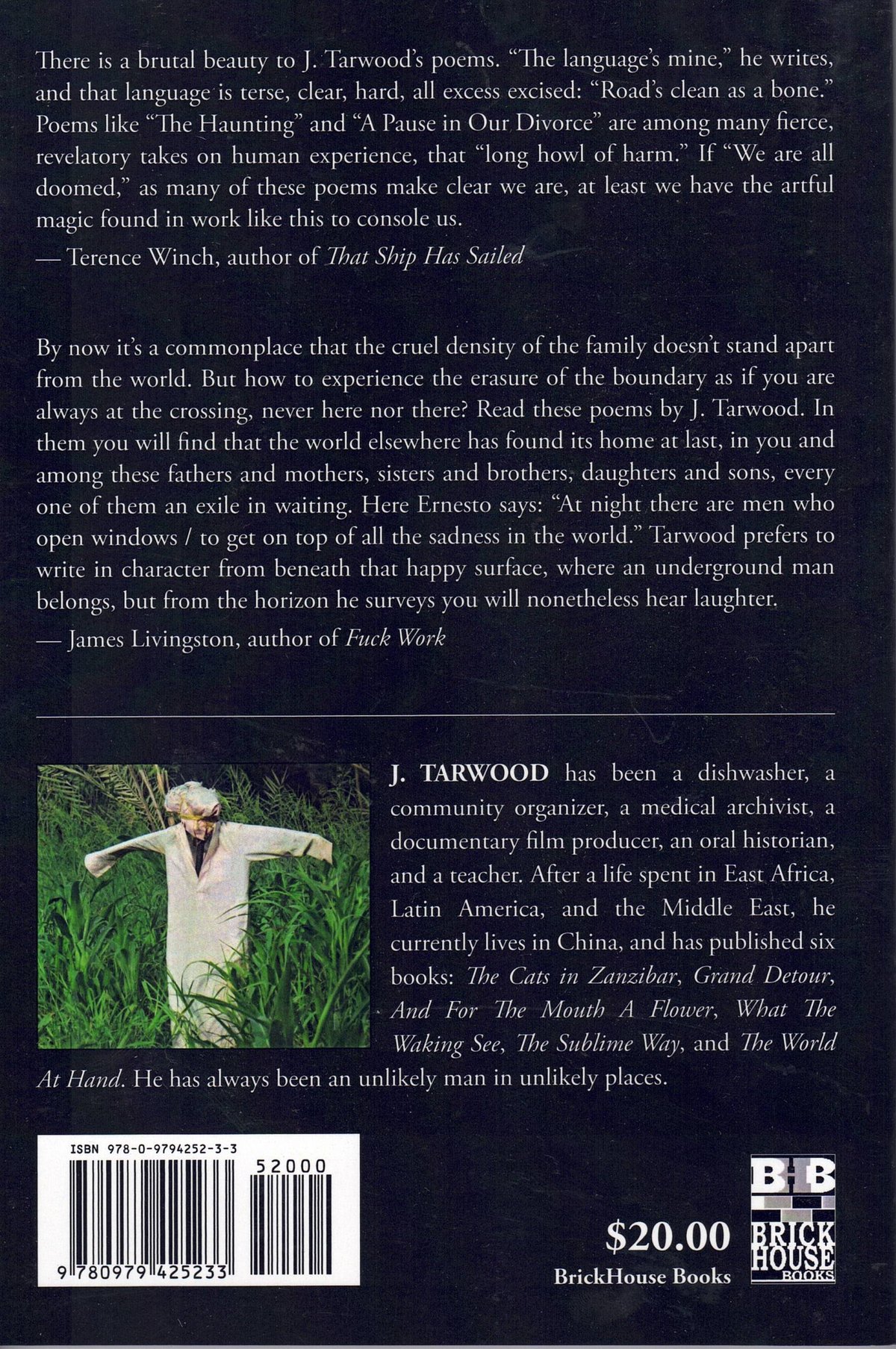
There is a brutal beauty to J. Tarwood's poems. "The language's mine," he writes, and that language is terse, clear, hard, all excess excised: "Road's clean as a bone." Poems like "The Haunting" and "A Pause in Our Divorce" are among many fierce, revelatory takes on human experience, that "long howl of harm." If "We are all doomed," as many of these poems make clear we are, at least we have the artful magic found in work like this to console us. — Terence Winch, author of That Ship Has Sailed

By now it's a commonplace that the cruel density of the family doesn't stand apart from the world. But how to experience the erasure of the boundary as if you are always at the crossing, never here nor there? Read these poems by J. Tarwood. In them you will find that the world elsewhere has found its home at last, in you and among these fathers and mothers, sisters and brothers, daughters and sons, every one of them an exile in waiting. Here Ernesto says: "At night there are men who open windows / to get on top of all the sadness in the world." Tarwood prefers to write in character from beneath that happy surface, where an underground man belongs, but from the horizon he surveys you will nonetheless hear laughter. — James Livingston, author of Fuck Work

J. TARWOOD has been a dishwasher, a community organizer, a medical archivist, a documentary film producer, an oral historian, and a teacher. After a life spent in East Africa, Latin America, and the Middle East, he currently lives in China, and has published six books: The Cats in Zanzibar, Grand Detour, And For The Mouth A Flower, What The Waking See, The Sublime Way, and The World At Hand. He has always been an unlikely man in unlikely places.

ISBN 978-0-9794252-3-3

$20.00 BrickHouse Books

There is a brutal beauty to J. Tarwood's poems. "The language's mine," he writes, and that language is terse, clear, hard, all excess excised: "Road's clean as a bone." Poems like "The Haunting" and "A Pause in Our Divorce" are among many fierce, revelatory takes on human experience, that "long howl of harm." If "We are all doomed," as many of these poems make clear we are, at least we have the artful magic found in work like this to console us. — Terence Winch, author of That Ship Has Sailed

By now it's a commonplace that the cruel density of the family doesn't stand apart from the world. But how to experience the erasure of the boundary as if you are always at the crossing, never here nor there? Read these poems by J. Tarwood. In them you will find that the world elsewhere has found its home at last, in you and among these fathers and mothers, sisters and brothers, daughters and sons, every one of them an exile in waiting. Here Ernesto says: "At night there are men who open windows / to get on top of all the sadness in the world." Tarwood prefers to write in character from beneath that happy surface, where an underground man belongs, but from the horizon he surveys you will nonetheless hear laughter. — James Livingston, author of Fuck Work

J. TARWOOD has been a dishwasher, a community organizer, a medical archivist, a documentary film producer, an oral historian, and a teacher. After a life spent in East Africa, Latin America, and the Middle East, he currently lives in China, and has published six books: The Cats in Zanzibar, Grand Detour, And For The Mouth A Flower, What The Waking See, The Sublime Way, and The World At Hand. He has always been an unlikely man in unlikely places.

ISBN 978-0-9794252-3-3

$20.00 BrickHouse Books